Meet the Journal Editorial Team
The Oral History journal is edited by
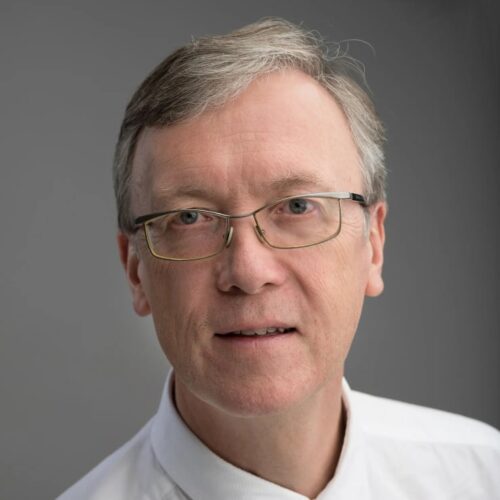
Rob Perks
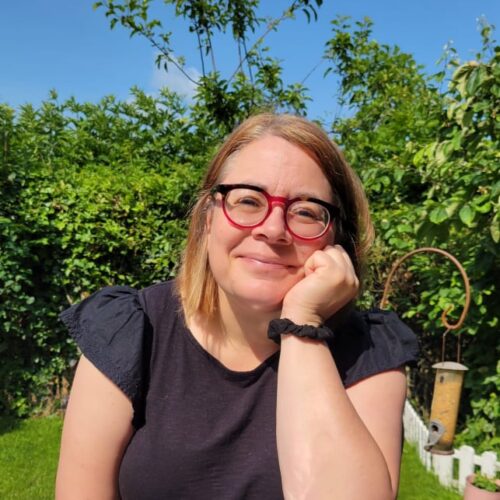
Lindsey Dodd

Jenny Harding

Joanna Bornat

Christine Wall
Sean O’Connell
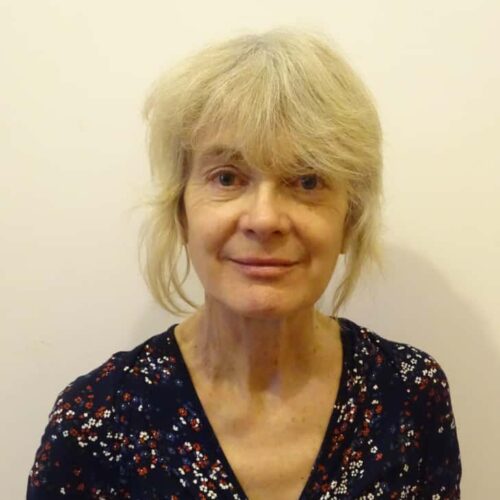
Heather Norris Nicholson
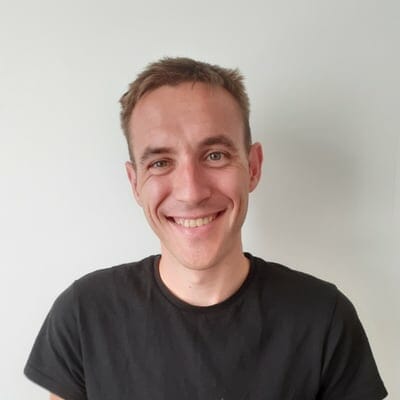
Fearghus Roulson
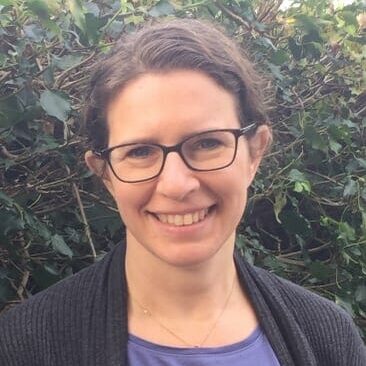
Liz Ison
George J. Severs

Camille Johnston
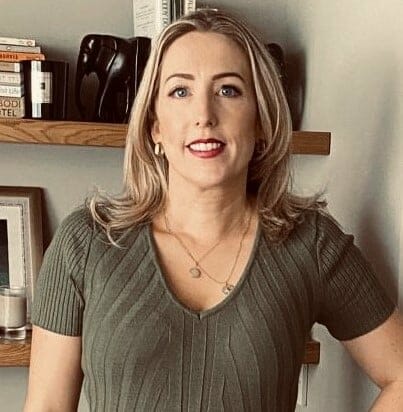
Anna Bryson
Michael Romyn
Lucy Newby
Chandan Mahal
Verusca Calabria
Ruth Beecher
Issue Editor
Rob Perks
I first discovered oral history when I was studying for a doctorate in political history, since when I helped establish the Bradford Heritage Recording Project in the early 1980s, working as a museum curator, before a period in television. From 1988 until my recent retirement, I was Lead Curator of Oral History at the British Library, and Director of National Life Stories since 1996, heading a team of interviewers, archivists and transcribers involved in oral history collecting and fieldwork in a variety of sectors: from arts and crafts to business and finance, from the utilities to science, from architecture to publishing. I’ve been Secretary of the Oral History Society and an editor of Oral History Journal since the later 1980s. I’ve acted as an advisor to a range of oral history organisations around the world, including the National Lottery Heritage Fund (HLF) and BBC Radio in the UK, and projects in Canada, Greece, India, Australia, Russia, Ukraine, Turkey, China and Ireland. In 2007 I was awarded an honorary DLitt by the University of Huddersfield. My publications include The Oral History Reader (Routledge, third edition 2015, with Al Thomson). My last major project before retiring was ‘Unlocking Our Sound Heritage’, an ambitious five-year £18.8m project to digitally preserve 100,000 of the nation’s most rare and vulnerable sound recordings, both at the British Library and around the UK, working with a consortium partnership network of ten regional audio preservation centres.
Issue Editor
Lindsey Dodd
I’m an oral historian and heritage practitioner and have been on the editorial board of Oral History since 2015. I work in the heritage sector. I’ve used oral history as a research methodology for many years and am always interested to see new interpretative techniques and practical applications. The bulk of my published academic work was on children’s lives in Second World War France. It includes considerations of traumatic memories, Holocaust memory, place and space in memory, the adult-child relationship in memories of childhood, remembering communities, and memories as feelings. I’m a strong advocate of the creative and dynamic re-use of archived oral histories. My second book Feeling Memory: Remembering Wartime Childhoods in France was published by Columbia University Press in 2023.
Issue Editor
Jenny Harding
I am Professor of Media and Culture at London Metropolitan University. I have researched and written about cultural theory, emotions, gender and sexuality and have been involved in a number of community based oral history projects. I am a trustee of The Oral History Society, one of the editors of Oral History, Chair of the Oral History in Higher Education Special Interest Group and a member of the LGBTQ+ Special Interest Group.
Issue Editor
Joanna Bornat
I am a long-standing OHS trustee and have been an editor of the society’s journal Oral History for over forty years. I am emeritus professor of oral history at the Open University where I taught in what was then the Faculty of Health and Social Care. I have a particular interest in remembering from a late life perspective and the contribution of oral history to changing understandings of the past, who gets to be a historian and retrieving marginalised experience. I have researched and published on reminiscence, migration, community history, inter-generational remembering, belief and non belief, biographical research methods and the re-use or secondary analysis of archived oral history. Over the years I have taken part in and organised various oral history conferences and I’m delighted to see that interest in recording memories continues to engage with an ever widening range of topics, drawing in new communities and making creative use of inclusive sound and visual technologies. When I’m not doing oral history I like to walk, cycle, read, engage with local history where I live in north London and be involved in local campaigning.
Issue Editor
Christine Wall
I am Professor Emerita of Architectural History at the University of Westminster. My research as an oral historian focuses mainly on the built environment, but I have also researched and written on the working lives of teachers, railway workers and bank workers. After working as a carpenter and trade trainer for twelve years I studied architecture as a mature student. This personal experience underpins my interest in how historical perspectives on the twentieth century, built environment are shifted by including the voices of those usually marginalised. My research includes the oral histories of women designers and builders, lesbian squatted communities, building and housing co-operatives and I led the Leverhulme Trust funded oral history project, Constructing Post-War Britain: building workers’ stories 1950-1970. I am a member of the LGBTQ+ Special Interest Group and joined the Editorial Board of the Oral History Journal in 2015. Between 2022 and 2025 I held a Leverhulme Emeritus Fellowship while researching the oral history project, ‘If I had a hammer’: feminist activism and the built environment in Britain 1975-2000.
Issue Editor
Sean O’Connell
Issue Editor
Heather Norris Nicholson
As an editorial board member with the Oral History Journal, I contribute regularly to the reviewing of submitted manuscripts, I liaise with members of the International Editorial Advisory Group and I also helped with preparation of the journal’s special anniversary online issue in 2019, OHS@50. Working as an independent consultant, researcher and cultural historian has involved me with many voluntary groups and local organisations including most recently, Windrush: The Years After: A Community Legacy on Film and the creation of a Windrush Memorial Garden in Huddersfield, West Yorkshire. I have a background in inter-disciplinary teaching and research, including social change, tourism history, migration history, cultural identity and memory, and also indigenous documentary film-making in Canada. I have published extensively on film history, particularly contributing to the international growth of amateur film studies and related issues of personal story-telling, archiving and interpretation. I hold honorary positions at the University of Huddersfield and at Manchester Metropolitan University.
Reviews Editor
Fearghus Roulson
I am co-reviews editor for Oral History, along with Lucy Newby and Michael Romyn. I’m also Chancellor’s Fellow in the History of Activism at the University of Strathclyde and co-director of the Scottish Oral History Centre. My first book, Belfast Punk and the Troubles: An Oral History, came out with Manchester University Press in 2022. Broadly, I’m interested in the ways in which interpretative oral history and memory studies can illuminate people’s affective and discursive relations to politics, place and culture, in public or community history, in cultural history and in collaborative writing practices.
Editorial Assistant
Liz Ison
Hello, I am the editorial assistant for Oral History. I help with the day-to-day running of the journal, including the submissions and review process, editors’ meetings, author agreements, advertising and administrative tasks. Please do get in touch if you have a question, want to submit an article or would like to advertise in the journal! I will be happy to help.
Public History Editor
George J. Severs
I have edited the Public History section of the journal since 2020. I am an oral historian of sexual health, sexual violence, HIV/AIDS and activism in modern Britain, working at the Graduate Institute in Geneva in Switzerland. I am currently working on an oral history project which examines the history of race and sexual health in post-war Britain, and previously used oral histories to explore the history of psychiatric understandings of male survivors of rape. My book Radical Acts is a study of HIV/AIDS activism in England between 1982 and 1997. It is based on a collection of original oral history interviews and a substantial amount of ‘re-used’ archived interviews. Elsewhere I have worked on the Church of England’s responses to the HIV/AIDS epidemic and the history of anti-gay sentiment within the British far-right. Articles and book reviews by me have appeared in Oral History, Oral History Review, History & Policy and History Workshop Journal. As an active queer oral historian, I am proud to have served as the Secretary of the LGBTQ Special Interest Group of the OHS since 2018.
Editor of Current British Work
Camille Johnston
I am an archivist specialising in oral history and have worked within the National Life Stories team at the British Library since 2017. I am particularly interested in finding ways to improve access to archives and have been involved with the production of several websites for the British Library which highlight audio from the collections within a series of articles. Since 2018 I have also coordinated the Oral History Society/NLS training programme, organising in-person and online oral history training courses for individuals and projects across the UK. Before training to become an archivist at UCL I completed studies in Fine Art at Chelsea College of Arts in London and Konstfack in Stockholm.
I am the editor for the Current British Work section of the Oral History journal, so please get in touch to tell me about your oral history projects, new websites, podcasts, exhibitions and publications.
Journal Editor
Anna Bryson
I am a Senior Lecturer in Law at Queen’s University Belfast and a Fellow of the George J. Mitchell Institute for Global Peace, Security and Justice. I joined the editorial board of Oral History in 2022. My most recent research has developed at the intersection of oral history, twentieth century Irish history and transitional justice. I have worked on a number of oral history projects focusing on aspects of the history of conflict in Ireland (themes include political prisoners, the peace process, peace walls, the role of apologies in ‘dealing with the past’, and the history of the Law Centres). I have also conducted comparative international research on the role of radical or ‘cause’ lawyers. I am currently completing a monograph titled ‘Conflict and Civility: Memory, Identity and Dealing with the Past in Northern Ireland’ based on oral history interviews collected in 1999-2001. For the past eight years I have been working with a team of legal academics and human rights activists to help inform the public policy debate on dealing with the legacy of the Northern Ireland conflict (focusing particularly on the proposals on oral history). I have a particular interest in the ethical challenges of working with victims and survivors including capturing traumatic memory. I recently published a toolkit for the Victims and Survivors Service of NI addressing these issues. I also sit on the Royal Irish Academy’s ‘Ethical, Political, Legal and Philosophical Studies Committee’. In addition to my work with the Oral History Society, I am chair of the independent human rights organisation, the Committee on the Administration of Justice, and sit on the board of the Socio-Legal Studies Association.
Reviews Editor
Michael Romyn
I am a historian of late twentieth-century and contemporary urban Britain, and a Fellow at the Institute of Historical Research. I previously worked on community history projects, including the award-winning ‘Kent’s Sporting Memories’heritage and wellbeing project. My first book, London’s Aylesbury Estate: An Oral History of the ‘Concrete Jungle’, was published by Palgrave Macmillan in 2020.
Reviews Editor
Lucy Newby
I am co-reviews editor for Oral History, along with Michael Romyn and Fearghus Roulston. I have conducted previous oral history research on youth and conflict in Northern Ireland, and currently teach history at Manchester Metropolitan University. My research concerns issues of historical erasure, the power dynamics of popular memory cultures, and the politics of hearing and recognition in oral history interviews. In my current role, I also work to support the development of community-led oral history projects across the city of Manchester.
Learning Editor
Chandan Mahal
Dr Chandan Mahal is the Learning Projects Manager at the British Library where she led the national public engagement programme for the Unlocking Our Sound Heritage project (2017 to 2023). Along with leading projects to explore how sound archives can promote historical curiosity, support wellbeing, memory, and creativity, she led on the creation of new digital learning resources including Voices of Partition and Speaking Out. She has worked in heritage for over twenty years, managing education and community-led research programmes for diverse audiences. Her PhD research examined the relationship between family history and ancestral place for people with diasporic connections to Punjab. A collaboration between Queen Mary University London and the Royal Geographical Society (with Institute of British Geographers), her research examined the role of oral histories, and material culture in recovering family memory to understand the significance of ancestral residence, departure, journeys and settlement. She is currently a Trustee for the Heritage Alliance and also an advisor to Leaders of National Life project.
Journal Editor, Nominations Subcommittee Convenor
Verusca Calabria
I am a long-standing trustee of the Oral History Society. I am an Associate Professor of Mental Health histories in the Department of Social Work, Care and Community at Nottingham Trent University. My research sits at the intersection of the social history and heritage of mental healthcare and I specialise in the co-production of mental health histories. I co-founded and co-convene the Nottingham Trent University Oral History Network. My latest project, “Fifty Years of Middle Street Resource Centre” explored and documented the rich and hidden history of a mental health day centre using oral history inclusive art-based methods, including illustrations, artwork, poetry and film. You can find out more about the project on my website: www.mentalhealthcarememories.co.uk/. I co-chair the Oral History Society’s Higher Education Special Interest Group. I am on the management committee of the National, International and Transnational Histories of Healthcare, 1850-2000 (EuroHealthHist) COST Action and I lead the Action’s working group ‘Heritage and Public Engagement’.
Public History Editor
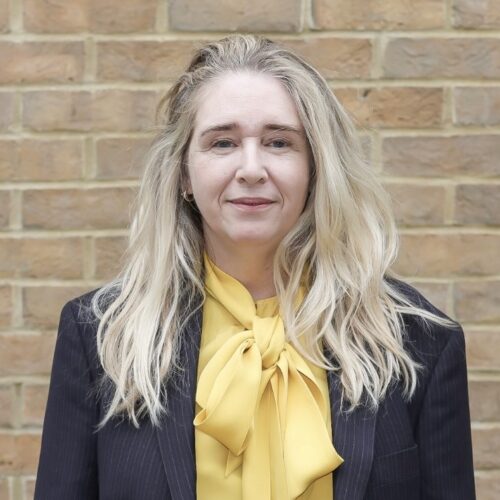
Ruth Beecher
My interests are in the histories of medicine, welfare and childhood in Britain, Ireland and the United States. Oral histories are central to my work, and I use them in tandem with archival research. I am based at Birkbeck, University of London, where I am currently (2024-28) leading a team to produce the first social, cultural and medical history into recovery from childhood sexual abuse in the second half of twentieth century Britain and Ireland. My first book, Community Health Practitioners and Child Sexual Abuse in the Family, 1970s-2010s was published with Palgrave Macmillan in April 2025. I am a member of the OHS Higher Education Special Interest Group.
I am interested in the ethical challenging of undertaking complex, politically charged and emotionally demanding histories and I am co-chair of the international Challenging Research Network.
I am also the founder and a trustee of the heritage charity Úna Gan a Gúna: Irish Women’s Oral History Collective which gathers and preserves the stories of women born in the twentieth in Ireland and in the diaspora.
International Editorial Advisory Board
Peter Anyanga O Wasamba
Laura Benadiba

Riki van Boeschoten
Indira Chowdhury
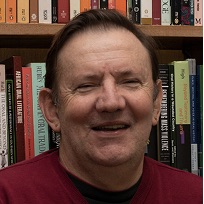
Sean Field
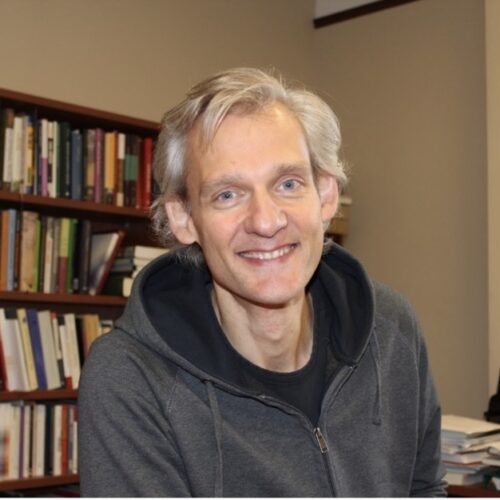
Alexander Freund
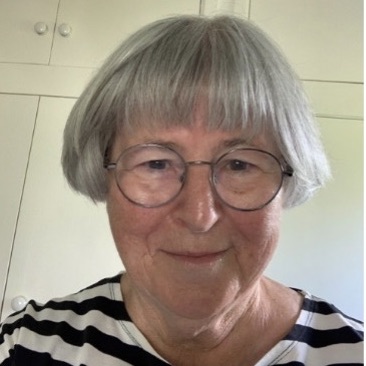
Anna Green
Juan J Gutiérrez
Anne Heimo
Steven High
Daniela Koleva
Robson Laverdi
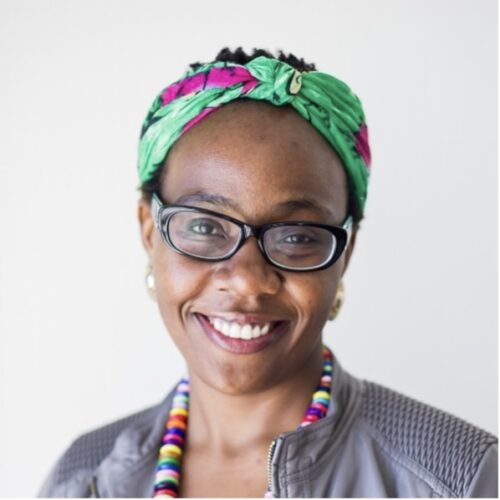
Cindy Nompilo Ndlovu
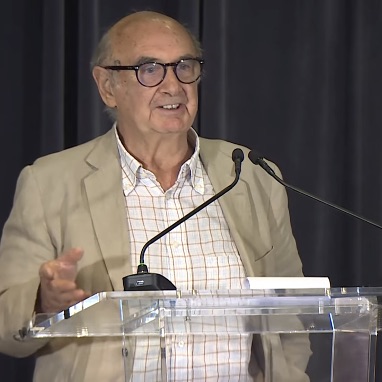
Alessandro Portelli
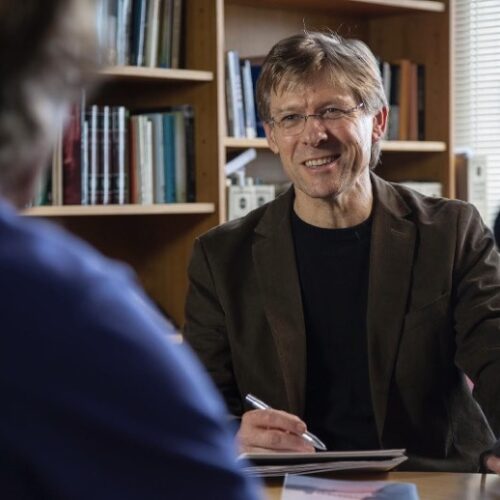
Alistair Thomson
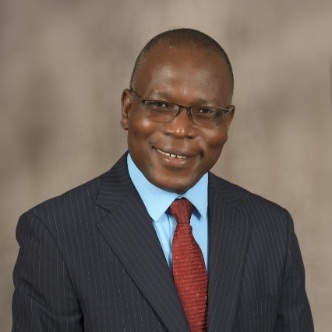
Peter Anyanga O Wasamba
University of Nairobi, Kenya
I am a professor of African Literature at the University of Nairobi and also a law scholar and a practising advocate. I have research experience in oral literature spanning over two decades, including much work on oral testimonies in Kenya and Korea. I am especially interested in methodology, emerging ethical issues, and intellectual property rights in oral literature research.
In Kenya, oral history straddles various disciplines which employ interviews and performances to document people’s insights. Historians use oral history; sociologists refer to oral testimonies and in literature we use ‘Oral Literature’. In actual fieldwork situations, the research methods are the same. The competing terminologies are only for safeguarding disciplinary identities.
I have been a passionate user and trainer in oral testimonies from early 2000, using these approaches in academic circles and community development initiatives. Increasingly, these approaches are also employed by sociologists, economists, and medical researchers in Kenya to capture voices and perspectives of community members on the margins of existence.
I normally recommend the Oral History journal to my students, especially postgraduate students conducting research using oral testimonies methodologies. We published an article on fieldwork during the Covid-19 pandemic global lockdown that also brought wider interest in the journal among students and university colleagues. Kenya does not feature prominently in the journal’s International Section and I look forward to encouraging local researchers and students to contribute research papers and reviews to raise the profile of oral history work in Kenya.
Laura Benadiba
Otras Memorias Archivo Historia Oral, Argentina
Hello! I have many experiences to share! Excuse my sincerity but Oral History has to be a democratising process. In Argentina, much Oral History occurs at community level rather than in university settings due to restrictions on academic freedom. Writing for publication overseas is important to disseminate new knowledge and ideas.
I began to use Oral History approaches in social sciences more than twenty-five years ago and since then my practical outreach, educational projects and research have resulted in publications, presentations and working with Oral History with all age-groups in and beyond Argentina.
My Oral History projects include working with older adults and in prisons and by the time of the COVID pandemic, almost 2000 secondary pupils had attended Oral History congresses for schools. These events offer pupils and teachers opportunities to share, discuss and develop Oral History approaches as routes into understanding lived experience and recovering the unheard or underheard voices of peoples in different societies.
My pedagogical writing on Oral History also includes teachers at nursery, primary, secondary and university level. Recent projects include the role of Oral History in understanding social movements, an essay on memory and a study of gender violence in which people could share personal experiences as they remained in charge of the interviewing process.
Riki van Boeschoten
Riki van Boeschoten University of Thessaly, Greece
My name is Riki Van Boeschoten and I am Professor Emerita of Social Anthropology and Oral History, University of Thessaly. I taught a core course in oral history at the Department of History, Archaeology and Social Anthropology between 2000 and 2015 and I have created at the same department an oral history archive containing over 1000 interviews. In 2012 I took the initiative with other oral historians to create the Greek Oral History Association (GOHA), which I chaired until November 2023.
Throughout these years the Oral History journal has been a major resource and constant source of inspiration in my teaching and academic work, in the oral history workshops we run on a regular basis with the GOHA and in connecting the Greek oral history community with its international counterparts.
Indira Chowdhury
Indira Chowdhury Srishti-Manipal Institute of Art, Design and Technology, Bengaluru, India
My journey into oral history began with interviewing scientists who worked in institutions that were set up in Independent India. I have found oral history to be a very critical method with which to understand change in postcolonial India. My own interest in how people experience change led me to also interview traditional artisanal communities who often struggle with modernity, industrialization and ever-changing technologies. The Oral History journal has been very important for me and my students because it engages with questions that are at the core of our practice with examples across the world. I was President of the Oral History Association of India, 2013-2016 and President of the International Oral History Association, 2014-2016.
Sean Field
Sean Field University of Cape Town, South Africa
I am fascinated by how people consciously and unconsciously narrate their life histories. My academic career has involved the practice and teaching of oral history methodology. My PhD (from University of Essex) was on the Windermere/Kensington community and apartheid forced displacements and was completed in 1996. I began work in the Historical Studies Department in 1997 as coordinator of the Western Cape Oral History Project, and I also served as Director of the Centre for Popular Memory (CPM) from 2001 to 2012.
I was a founder member of the Oral History Association of South Africa (OHASA) and Vice-President of the International Oral History Association (IOHA) from 2008 to 2010. My current research involves: (post)colonial oral histories of violence, and debates about trauma theory, memory, and psychoanalysis. I am also interested in parenting styles of trauma survivors, and how the child’s sense of self is intersubjectively framed and anti-referential psychic trauma is constituted across generations.
Alexander Freund
Alexander Freund University of Winnipeg, Canada
I am a professor of history and I hold the Chair in German-Canadian Studies at the University of Winnipeg, where I have also co-founded and directed the Oral History Centre. I am in the process of setting up an archive of oral histories and personal documents of German immigrants in Canada. I have conducted research and published on migration history and oral history since 1993. I am currently working on a history of refugees in Winnipeg since 1945, a book on oral history theory, and a project on German immigrant fathers and their sons in twentieth-century Canada. I am also co-editing (with Al Thomson and Erin Jessee) the Bloomsbury Handbook of Oral History. I regularly use Oral History for my research and teaching and occasionally I publish in the journal.
Anna Green
Victoria University of Wellington, New Zealand
I am an adjunct professor at The Stout Centre for New Zealand Studies at Victoria University of Wellington | Te Herenga Waka. A historian for the past 40 years, I taught history, oral history and history and theory at Waikato, Exeter (UK) and Victoria universities.
I am currently working on two oral history books. The first, a Royal Society Marsden-funded project, explores the transmission of memories about the family past within multigenerational families descended from nineteenth-century European settlers. In addition, I am editing, with Megan Hutching, a new anthology of oral history research in New Zealand which will be published by Otago University Press in late 2024. I am currently the president of the National Oral History Association of New Zealand | Te Kete Kōrero-a-Waha o Te Motu.
For my publications since 2012 see:
https://www.wgtn.ac.nz/stout-centre/about/staff/associate-professor-anna-green
Juan J Gutiérrez
California State University, USA
I am a Mexican cultural anthropologist currently working both in Spain and the US. My academic foundation was laid at the Mexican Universidad de Queretaro where I became an ethnohistorian. I later earned a PhD in Anthropology at the University of California, Santa Barbara. I currently hold the position of lead faculty for the Cultural Anthropology Concentration within the Social Sciences and Global Studies Program at California State University, Monterey Bay.
My career has been marked by prestigious roles, including Director of the Institute for Mexican and Mexico-US Studies, Vice President of the International Oral History Association (IOHA), and Director of the CSU International Program in Spain. Currently, I am collaborating with the Ethnographic Museum of Leon (Museo de los Pueblos Leoneses), where my focus is on cataloguing and organising the Concha Casado Archive for research purposes, in addition to developing the institution’s Oral History Archive.
My research journey has traversed Mexico, the United States, and Spain, providing me with the opportunity to delve into diverse community dynamics and historical events. In Mexico, my attention to rural communities in the State of Queretaro has resulted in several publications on agrarian issues. In California, I have concentrated on studying immigrant communities, particularly through the lens of oral histories from entrepreneurial immigrants. My efforts in Spain have culminated in the compilation of oral histories that reflect the experiences of Spanish return emigrants from the 1960s, work that led to the publication of my book Xente d’Arroxu (Courageous Lives) by the Universidad de Leon.
Anne Heimo
University of Turku, Finland
I first discovered oral history and the Oral History journal in the early 1990s when I was doing my masters’ thesis on 1918 Finnish civil war narratives. At the time oral history was still struggling to find its place in Finnish academia. Today I am Professor of Folkloristics (University of Turku), and I specialise in oral history and cultural memory studies. In addition to oral history research I also study, like many of my colleagues, other forms of personal narratives, e.g. online memories and life writings. I am a founding member and former chair of the Finnish Oral History Network (FOHN). We have had close connections with Oral History over many years and we have also cooperated closely with members of the Oral History Society (UK). Since 2014 I have co-chaired the European Social Science and History Conference (ESSHC) Oral history and life stories network.
Finnish oral history scholars are very active on the international level. We have authored articles and review pieces in Oral History and will continue to do so. As member of the International Editorial Advisory Board, I keep close contact with colleagues in Finland and elsewhere, especially in the Nordic and Baltic countries, and encourage them to contribute articles and reviews to the journal.
Since the 1990s when oral history research became more known in Finland, Oral History has been a substantial asset for Finnish oral history scholars and students. There is access to the journal in print or in electronic form in several Finnish university libraries as well as some other libraries among them the library of the Finnish Literature Society. Finnish oral historians including Ulla Savolainen, Anna-Kaisa Kuusisto-Arponen and I worked with Oral History to produce and co-edit one of the journal’s earliest special issues, ‘Nordic-Baltic Oral History’.
Steven High
Concordia University, Montreal, Canada
My name is Steven High and I am the co-founder of the Centre for Oral History and Digital Storytelling at Concordia University, which is celebrating its 20th anniversary in 2025. We are a vibrant interdisciplinary community of practice which brings together researchers, artists, educators, filmmakers and other digital practitioners, and other community members.
My main project is the transnational project, ‘Deindustrialization & the Politics of Our Time’ (DePOT – deindustrialization), which brings together the leading research centres, industrial museums, and trade unions in Western Europe and North America. Oral history is our core methodology.
I am very happy to be affiliated with the journal Oral History as it is the single best journal, in my opinion, in the global field.
Daniela Koleva
St Kliment Ohridski University of Sofia, Bulgaria
Hello, I am Daniela Koleva, Professor of Oral History and Memory Studies at Sofia University, Department of History and Theory of Culture. My research interests are in the fields of oral history and anthropology of socialism and post-socialism, biographical and cultural memory, politics of memory and heritage, ageing studies, social history of medicine. I have published a monograph on the ‘normal life course’ in communist Bulgaria largely based on oral history. My interest in the everyday life and life course under communism has resulted in a series of edited volumes, one of them international: Negotiating Normality: Everyday Lives in Socialist Institutions (Routledge, 2017). I am co-editor of Ageing, Ritual and Social Change: Comparing the Secular and Religious in Eastern and Western Europe (Ashgate/Routledge, 2013). My latest English-language book is Memory Archipelago of the Communist Past: Public Narratives and Personal Recollections (Palgrave Macmillan 2022)
Robson Laverdi
State University of Ponta Grossa-UEPG, Brazil
I am a historian, and I work as a professor and researcher at the State University of Ponta Grossa, Paraná, Brazil. I teach undergraduate history courses and also participate in the graduate history programme, where I coordinate the Research Centre for Memory, Culture, and Nature. Additionally, I hold the position of Director of Archives and Research at the Campos Gerais Museum.
My research focuses on Social Memory and Archives, guiding investigations related to oral history, memory, oral sources, public history, as well as exploring the relationships and interactions between culture and nature. I am a researcher at the Centre for the Development and Education of Traditional Yerba Mate Systems – CEDErva and a member researcher of the UNESCO/UFGD Chair on Gender, Cultural Diversity, and Borders.
I began working with oral history in the year 2000, providing guidance, assistance, and leadership for research in the field of social history of labor and workers, migrations, and socio-environmental themes. Currently, I am collaborating with colleagues in the development of theoretical and methodological approaches for the establishment of an environmental oral history. At the Campos Gerais Museum, I have been actively involved in creating experiences of oral history and public history with a focus on recording the narratives of marginalized social groups.
Cindy Nompilo Ndlovu
University of Cape Town, South Africa
My name is Dr Nompilo Ndlovu and I am an oral historian. My PhD study focused on the memory and justice initiatives associated with the Gukurahundi violent atrocities in post-colonial Zimbabwe (1982 – 1987). I studied in the Department of Historical Studies at the University of Cape Town, during which I also worked as an adjunct lecturer. I then held a two-year tenure in the Department as a Postdoctoral Fellow for the Mellon funded History Access programme. During this period, I developed my research focus on ‘languaging’ of past violations. I then extended this work to address counter histories in public life, where legacies of violence are unofficially addressed through public performance and local transitional justice initiatives. Prior to this, I studied and worked as a practitioner within the disciplines of Gender and Development amongst various communities within South Africa, and in other parts of the African continent. I also served with the UNAMID peacekeeping mission in Darfur, Sudan. I am currently completing an Executive Masters in International Relations with the Geneva School of Diplomacy and International Relations (GSD), Switzerland.
I have policy and research affiliations with a variety of institutions such as the South African Commission for Gender Equality, the International Oral History Association, the Tony Blair Institute for Global Change, the ODI, the African Union and the United Nations (Peace and Security apparatus’).
I am an alumnus of the Geneva School of Diplomacy and International Relations, the Geneva Centre for Security Policy; the Canon Collins Trust; the African Leadership Centre and the Women’s Funding Network.
Alessandro Portelli
University of Rome La Sapienza, Italy
I have been working on oral history since the founding of the Circolo Gianni Bosio for critical study and alternative presence of people’s cultures in the 1970s, which I still chair. My work available in English includes The Death of Luigi Trastulli: Form and meaning in oral history (1981), The Battle of Valle Giulia: Oral History as an art of dialogue (1997), The Order has been carried out: History, Memory and meaning of a Nazi Massacre in Rome (2003), They Say in Harlan County: An Oral History (2011), Biography of an Industrial Town: Terni 1821-2014(2017). My most recent book is Dal rosso al nero: La svolta a destra di una città operaia (From Red to Black: A Working-class Town’ Turn to the Right, 2023).
Alistair Thomson
Monash University, Melbourne, Australia
I am an Emeritus Professor in History at Monash University in Australia and President of Oral History Australia. Previously I was President of the International Oral History Association, Professor of Oral History at the University of Sussex and an editor of the journal Oral History (1991-2007). My oral history books include: Anzac Memories (1994 and 2013), The Oral History Reader (1998, 2006 and 2015 with Robert Perks), Ten Pound Poms (2005, with Jim Hammerton), Moving Stories: An intimate history of four women across two countries (2011), Oral History and Photography (2011, with Alexander Freund), Australian Lives: An Intimate History (2017, with Anisa Puri) and the co-authored Australian Fathering 1919-2019 (forthcoming).