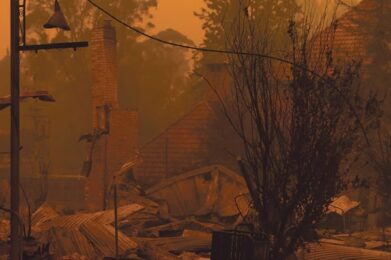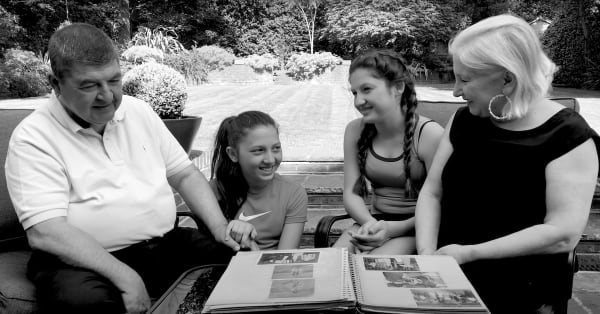
Featured image: Argun, showing the photograph album he rescued from his grandfather’s bombed out house in Cyprus, to his wife, Hurmus and grandchildren, Aleyna and Alara. From the film Life is a Destiny, courtesy of Child Migrant Stories
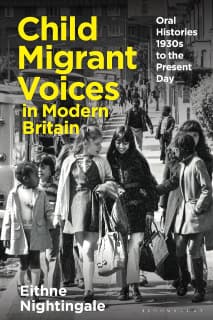
Child Migrant Voices in Modern Britain – Oral Histories 1930s to the Present Day, published by Bloomsbury in February 2024, was inspired by an initiative twenty years earlier. As V&A’s Head of Equality and Diversity I was asked to develop the World in the End East gallery at the V&A Museum of Childhood (now Young V&A) as part of the Museum’s strategy to reflect the diversity of the local area. Researchers from Bengali, Turkish, Caribbean, Somali, Rwandan, East European Jewish, Traveller and white East End working class communities were employed to collect tangible and intangible heritage on journeys, arrivals, play, education, leisure, festivals and work. Visitors peered into cases of Vietnamese water puppets and Galatasaray football shirts with object labels, highlighting their personal significance. They watched a moving film about a Rwandan refugee; listened to a podcast on the racism experienced by different communities and admired artwork based on multi-lingual playground rhymes.
In 2011 I started my part-time PhD research into child migration to east London from 1930s to the present day, an AHRC funded collaboration between Queen Mary University of London and the V&A. My PhD, one of three as part of the Child in the World initiative, built on the World in the East End gallery but there were differences. The focus of the PhD was on first generation child migrants whereas the World in the East End was more inclusive, reflecting the heritage of different generations of migrants as well as of white working-class communities with no traceable migration history. On reading the academic literature on child migration, however, I became convinced of the importance of this singular focus. Almost half the people displaced worldwide are under eighteen, yet childhood is often marginalised in migration studies and migration in childhood studies.
There were challenges. As a lone researcher I was unable to draw on the contacts and perspective of part-time researchers from diverse backgrounds, key to the success of the World in the East End. I had no personal history of migration except that my Irish mother moved to England as a teenager and, although I had worked with various migrant and refugee organisations in east London for decades, most people I previously knew had moved on. There was a certain research fatigue, with hard-pressed organisations unable to respond to the constant flow of researchers’ requests; some were wary of migrants being retraumatised, a fear I shared, or saw the research as being of little benefit to them. Various phone calls, emails and leaflets yielded few responses until I invited people to a launch where I outlined the research and received valuable feedback. It was this, and personal contacts with ex-colleagues, friends, neighbours, fellow activists, local businessmen and women that I knew from having lived and worked in east and north London for over fifty years that yielded the best response.
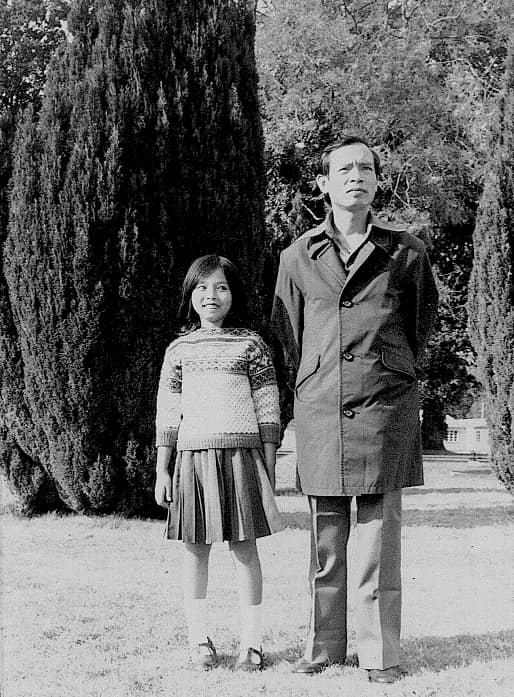
I adopted an open-ended approach to interviewing – with people able to choose what they shared. Some drew a childhood home or took me to childhood haunts. Several were artists, musicians, poets or filmmakers so with funds gained from Queen Mary’s Public Engagement Unit I co-produced, with the interviewees and a film graduate from QMUL, Mitchell Harris, a website and films childmigrantstories.com. We filmed Linh Vu drawing the boat in which she escaped Vietnam and on a visit to Thorney Island where she first stayed in a UK refugee camp for Passing Tides https://childmigrantstories.com/2016/06/09/passing-tides-story-of-a-young-girl-escaping-vietnam-with-her-father/.
Maurice Nwokeji provided the soundtrack to the film Ugwumpiti, about his experience of the Biafra war, short listed for the AHRC/BAFTA 2017 Research Film of the Year https://childmigrantstories.com/ugwumpiti/. All films have been screened in different settings, used in political campaigning and for training, for example, for people working with war-traumatised children.
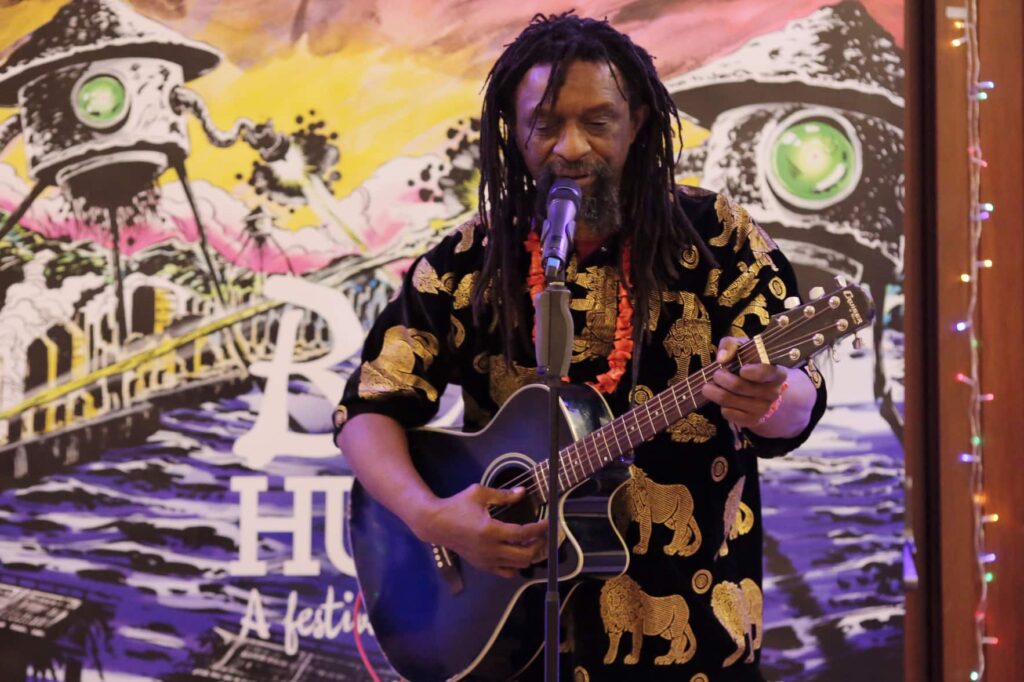
Maurice performing songs featured in Ugwumpiti at the Being Human launch festival, Senate House, University of London, 201.6
Courtesy of Maurice Nwokeji and Advanced School of Study, University of London. Copyright© Lloyd Sturdy.
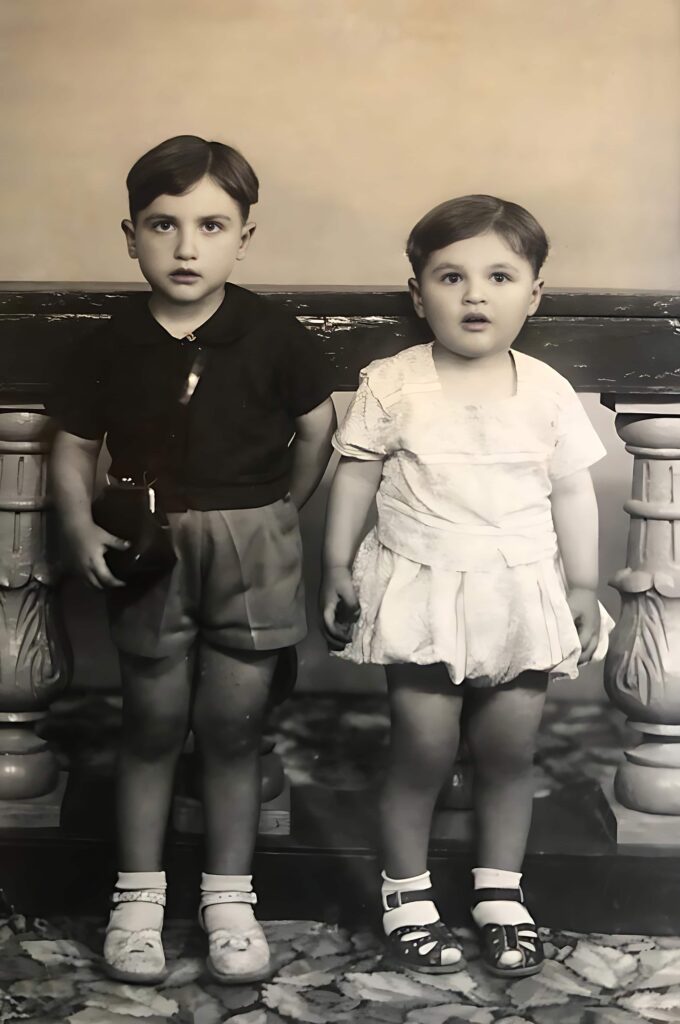
I had always wanted to incorporate the stories into a book of interest beyond academia but there were various challenges as to how to achieve this. Whereas my PhD focussed on key themes – departures, journeys, settlement, impact on adult life – I decided to group the stories historically, beginning with Orthodox Jewish children who came on the Kindertransport in the 1930s and ending with children who came from Ukraine in 2022. The stories reach beyond East London – not only featuring war-traumatised children who arrived from Mogadishu in Mile End but also from Syria on a Scottish Isle. Not all were refugees – some followed their parents to the motherland from the former British Empire.
Others came independently to escape FGM, forced marriage or military conscription.
Although it is the child migrants’ voices that drive this book, I insert myself, incorporating interactions between myself and the interviewee – there was plenty of laughter but also tears. I include my own learning, aware that an interviewer with a different background would have elicited other narratives. Building and sustaining trust has been key – consulting and involving those who have generously shared their stories in the website production, films, book and public engagement events.
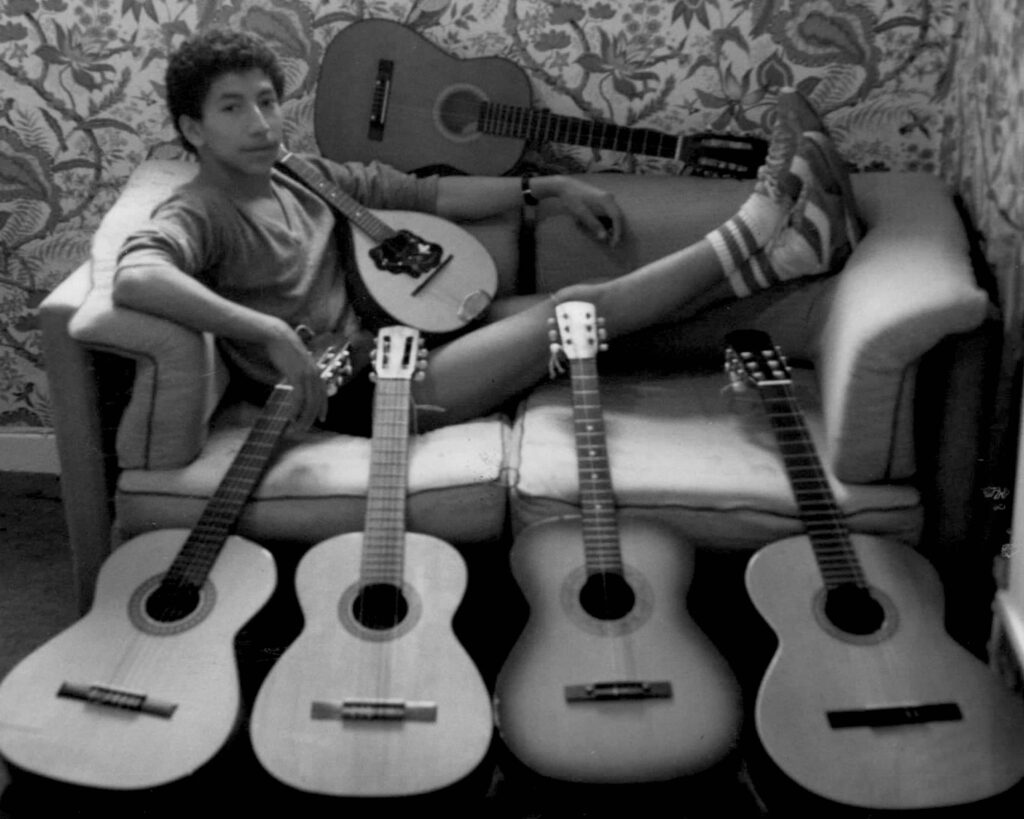
In both the introduction and conclusion, I draw on the academic literature, but with a light touch. The focus is on the child migrants’ testimonies, shedding light on their motivations, trials and achievements including in adult life and providing critical insight into how the British – both individually and collectively – have welcomed or shunned child migrants. Their stories highlight the injustice of the Windrush Scandal and Britain’s Illegal Migration Act 2023 but also policies and practices that could better support child migrants. I hope, therefore, that the book will attract a broad readership – students, those working with child migrants as well as people interested in inspiring life stories.
The website childmigrantstories.com, foregrounding the book, films and learning resources (for schools and adult ESOL students), has been redesigned in time for the book’s publication. An events calendar gives information on book launches – where Mariam will talk of her arrival aged sixteen from Guinea but whose age and identity were disbelieved by the Home Office; where young Ukrainians will talk of their life in Horsham, Sussex; where young Syrians will compare their experience of living on the Isle of Bute to living in Glasgow, perform rap music and provide delicacies from the Syrian bakery. In the hope that the stories can serve as an antidote to anti-migration rhetoric, books have been sent to key politicians. To quote Gulwali Passarlay, author of The Lightless Sky – An Afghan Refugee Boy’s Journey to Escape to a New Life in Britain, “Let’s challenge the negativity attached by the right-wing media and politicians towards the refugee crisis. People across British are sympathetic but it is the government who lacks compassion.”
The book can be purchased on https://www.bloomsbury.com/uk/child-migrant-voices-in-modern-britain-9781350332607/
Use Code GLR AQ7 for a 20% reduction from Bloomsbury or order from your local bookshop
Also check out Child Migrant Stories on childmigrantstories.com